

On Friday 6 November, Britain’s electricity system operator spent consumers’ money like a gold digger who just got her hands on a billionaire’s Amex, paying very high prices for additional electricity imports, with interconnector auctions recording clearing prices above £2,500 /MWh. NESO also accepted offers in the Balancing Mechanism at prices approaching £1,000 /MWh.
So why was NESO buying so much expensive electricity when there was apparently plenty of domestic generating capacity available?
Extended low wind period
Friday was forecast to be a low-wind day, and the first day of a forecast four-day wind lull ending on Monday evening. Wind is expected to fall as low as 500 MW during this period, against an installed base of around 34 GW. Electricity demand was expected to be broadly consistent with seasonal norms, peaking at around 41 GW (Fridays have lower demand than other weekdays).
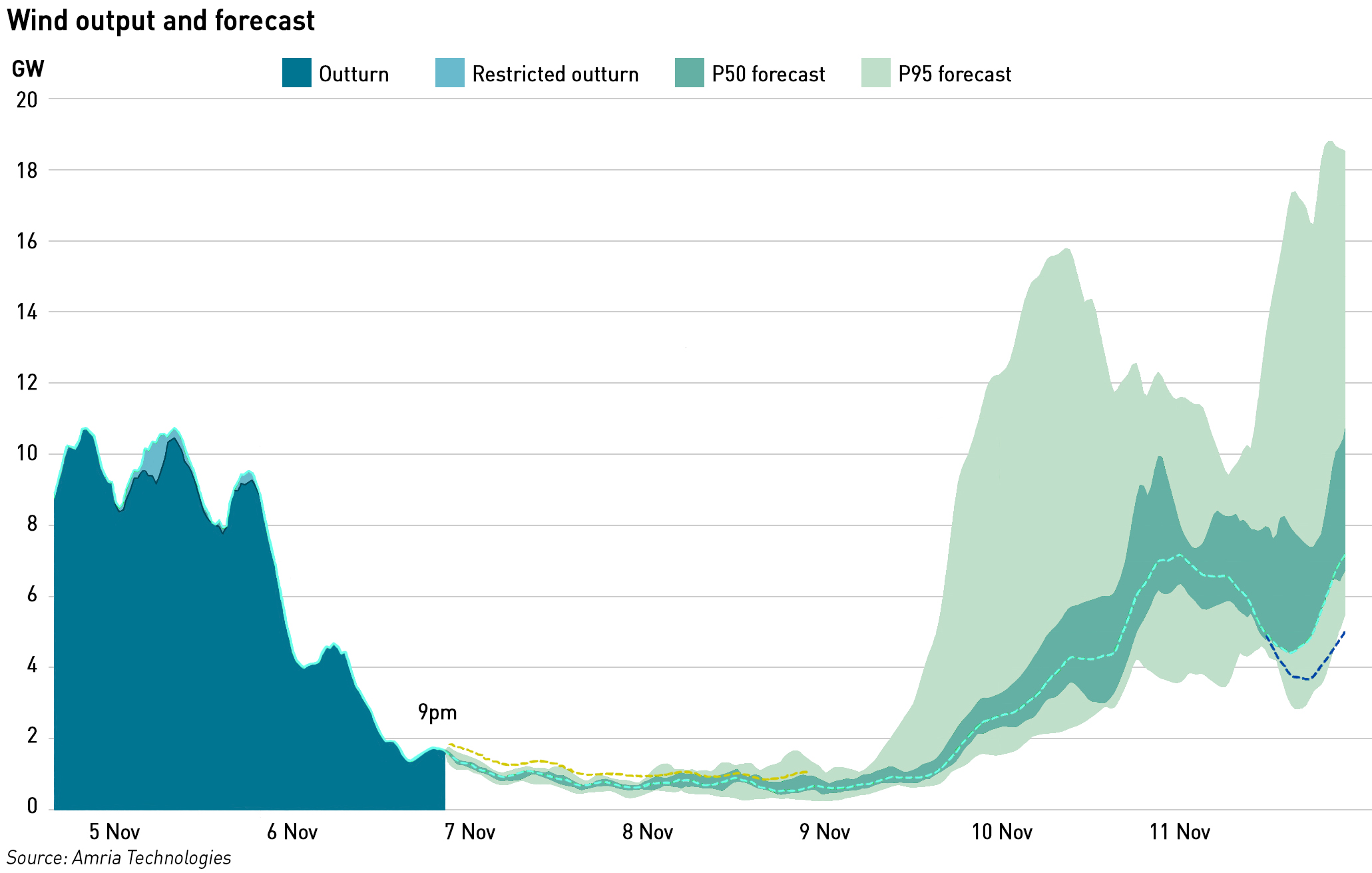
The wholesale electricity market had priced in these conditions with day-ahead prices reflecting the expected combination of demand and low renewable generation. Conventional generators and interconnector operators scheduled their positions accordingly with interconnectors nominated to import substantial volumes of electricity during the morning, reaching around 5.5 GW at 12:30pm. However, day-ahead import nominations declined from then on, dropping to 2.7 GW at 4pm rising to 3.8 GW at 8pm and then falling again later into the evening. Imports for 6pm – the expected peak – were nominated to be 3.0 GW.
However, as Friday progressed, NESO started buying. It made significant purchases on the interconnectors, buying substantial additional volumes of electricity through interconnector auctions. According to NESO’s published auction data, some of the prices were far above the Day-Ahead prices, paying up to £2,541.84 /MWh.
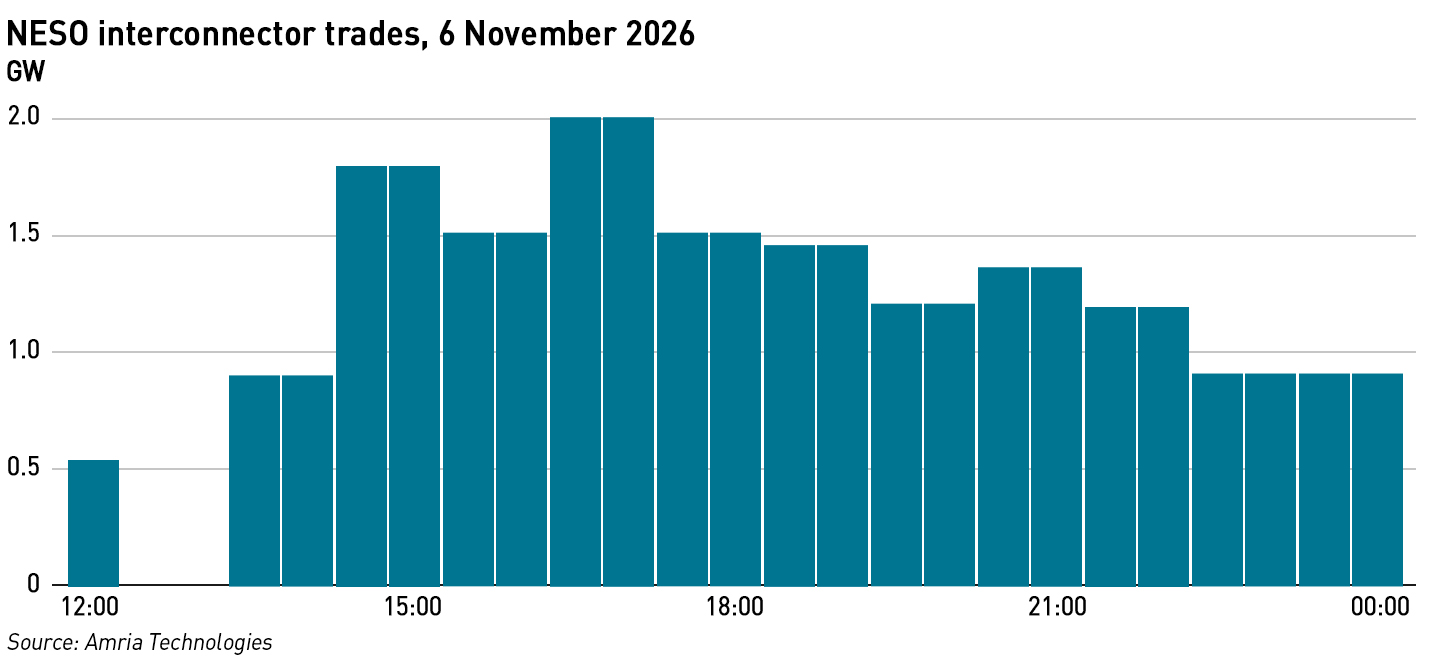
These were commercial interconnector trades, not system-operator-to-system-operator trades – NESO bought from market counterparties through established interconnector trading arrangements.
At the same time, NESO was also accepting expensive offers in the domestic Balancing Mechanism, with prices approaching £1,000 /MWh. From just after midday until 9:35pm, NESO began accepting high prices for CCGTs in the Balancing Mechanism, including Seabank, Rye House, Connah’s Quay, Cottam and Rocksavage. Several of these trades were done at £998 /MWh.
In other words, NESO was paying substantial premiums to secure additional electricity both from overseas and from generators already participating in the British market.
Was there actually a shortage?
The wholesale market had scheduled generation and imports to meet expected demand, and there was significant additional domestic generating capacity available through the Balancing Mechanism, including gas-fired power stations that had not been scheduled to run at full output. This raises an obvious question: if capacity was available, why hadn’t more of it self-dispatched through the wholesale market?
The likely explanation is that generators scheduled themselves against expected market prices and were not expecting NESO to need so much more electricity than the market had already arranged. Sometimes these behaviours reflect the impact of constraints for example on high wind days the Day-Ahead price is low, meaning CCGTs don’t self-dispatch and interconnectors can be traded for export, only for the situation to be reversed once NESO curtails wind that is constrained during the delivery day (NESO should curtail constrained wind before the Day Ahead auctions so that the market trades based on physically deliverable wind and not some theoretical volume that cannot be delivered in practice).
These constraint issues can be particularly relevant in the south-east where most of the interconnectors to Europe land – if they have been nominated to export against large amounts of undeliverable Scottish wind production, not only does NESO need to replace constrained wind with gas, it often has to reverse the exports if the gas generation can’t be transmitted into the south-east in order to satisfy those exports. This autumn significant volumes of gas generation in the south-east has been offline for maintenance, exacerbating this problem.
However, the geographical spread of the power stations receiving the highest prices in the BM on 6 November does not support the idea that these actions were primarily driven by grid constraints in the south-east (with the Scottish constraints being less relevant on a low wind day). The expensive offers came from power stations across England and Wales, rather than being concentrated in the areas where additional generation would relieve those constraints.
There’s another interesting feature of Friday’s balancing activity – despite NESO buying substantial additional electricity through the interconnectors and accepting expensive upward offers in the BM, the system’s Net Imbalance Volume (“NIV”) was mainly negative during the afternoon. NESO was taking more downward than upward balancing actions overall which suggests the expensive purchases weren’t just a response to an immediate shortage of electricity.
The balancing activity in settlement period 35 (5:00 – 5:30pm) is particularly interesting. NESO paid almost £486,000 to just four CCGTs (Seabank, Connah’s Quay, Rocksavage and Rye House) for around 491 MWh of additional generation, at prices between £978 and £998/MWh – the highest BM prices of the day. At the same time, it was accepting downward bids from numerous other units, particularly batteries, but also from another CCGT, VPI Immingham, which paid NESO around £24,000 to reduce its output.
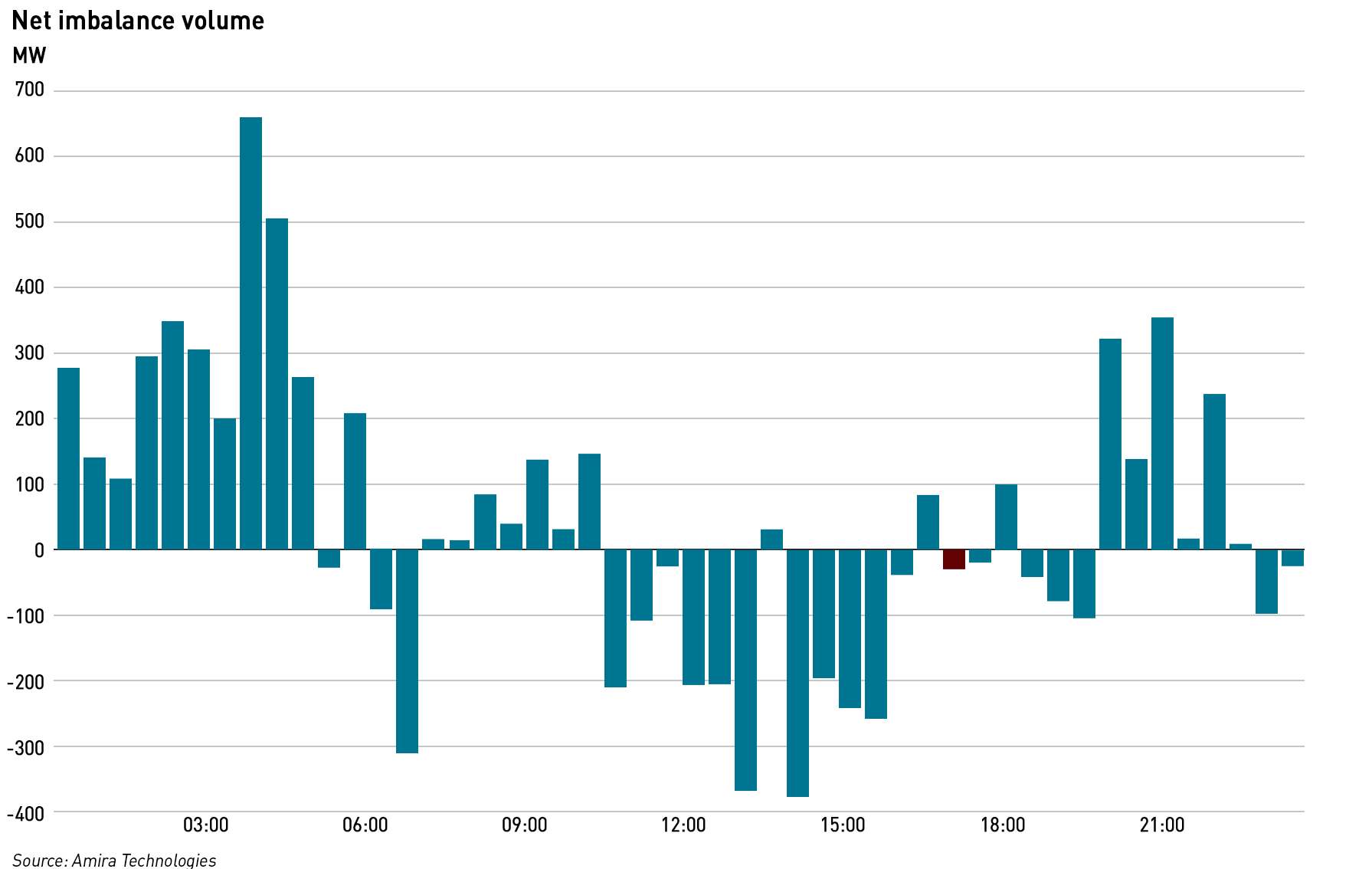
Downward bids from Immingham and four groups of batteries alone generated almost £125,000 in offsetting cashflows, with further receipts from other units. Yet the Net Imbalance Volume was just −26.74 MWh, equivalent to a net downward balancing volume averaging about 53 MW over the half-hour. NESO executed significant and expensive two-way balancing activity despite the net imbalance volume being very small relative to the gross balancing activity, while at the same time buying 2 GW of additional imports over the interconnectors.
This raises obvious questions about what operational requirements justified these interventions, and whether they could have been met more cheaply.
Was NESO worried about forecast errors?
One possible explanation is that NESO has become concerned about the accuracy of its forecasts and was trying to build margin against them. Recent days have seen significant discrepancies between forecast and actual wind generation and electricity demand. For example on Thursday 5 November, the combined demand and wind forecast error at one point reached around 2,600 MW. Luckily on that occasion both errors were in NESO’s favour: demand was lower and wind generation higher than forecast but it could easily have gone the other way.
For context, the largest-loss NESO must cover in respect of the largest infeed loss is currently 1,400 MW. If NESO is buying reserve sized to the largest loss, a forecast error that is larger than this could easily erode the reserve without any loss occurring. On a day with low wind output a large demand forecast error could present real problems. As I have described before, these errors can be almost 6 GW on a Day-Ahead, half hourly average basis.
However, today’s trades on the interconnectors and the BM were delivered, not reserve. Additional electricity from these trades was actually delivered to the market.
This is an important difference – buying reserve capacity provides insurance against a potential future shortfall, whereas accepting Balancing Mechanism offers and buying electricity through interconnector auctions changes the amount of electricity actually being delivered. Since system frequency remained broadly stable throughout the day, (there were brief excursions both above and below the operational limits, but they were minimal) the additional purchases must have been accommodated within the overall supply-demand balance.
One possibility is that NESO was deliberately changing the generation mix to improve operational flexibility – bringing additional CCGTs online, or increasing their output, could provide more sustained generation and potentially more upward reserve, while reducing output elsewhere would prevent the system becoming over-supplied. That could explain the simultaneous upward and downward balancing actions, although increasing a CCGT’s output does not automatically increase its remaining upward headroom.
The operating data for the CCGTs receiving the highest Balancing Mechanism prices in SP35 provides a possible explanation. NESO appears to have been positioning several gas-fired power stations at or near their Stable Export Limits (“SELs”), rather than running them at maximum output. This leaves the capacity between SEL and the Maximum Export Limit (“MEL”) available to increase generation quickly if required – CCGTs can move from SEL to MEL in around 15 minutes.
Across Seabank, Connah’s Quay, Rocksavage and Rye House, this amounted to potentially more than 1 GW of upward flexibility. In other words, NESO may have been paying extraordinary prices not simply for the electricity these power stations were generating, but to ensure they were running and capable of providing additional output if forecasts deteriorated. The electricity was delivered, but the real objective may have been to create additional operating reserve.
At the same time, NESO was turning down batteries, preserving their charge for later use if needed. This complemented the CCGT actions: bringing gas-fired generators online created additional upward flexibility, while reducing battery discharge preserved short-duration flexibility. Together, these actions suggest NESO might have been deliberately increasing the system’s ability to respond to an unexpected shortfall, rather than simply buying electricity to meet immediate demand.
This doesn’t explain the interconnector purchases which were both large and expensive (although the prices in SP35 were lower, they were still over £500 /MWh). NESO was paying substantial premia for additional imported electricity that was actually delivered, rather than simply securing the option to import if conditions deteriorated. The fact that NIV was generally negative during the afternoon makes this particularly interesting.
It’s possible NESO was so concerned about a large demand forecast error during a period of low wind that it took an unusually conservative approach, buying additional electricity and adjusting domestic generation to maintain a greater margin of security. But the publicly available data don’t confirm one way or the other if this was the reason for its actions.
The question is whether NESO was responding to an operational requirement that wasn’t visible to the wholesale market, or whether it was paying huge premia to protect against forecasting uncertainty. Either way, consumers deserve an explanation of why so much expensive intervention was necessary when significant domestic generating capacity was available and the system’s net imbalance was often small or negative.



Again, difficult for a non-expert to comment on the detail, but for me it raises some questions.
1. Does NESO have the knowledge and expertise to manage the grid both to prevent power cuts and minimise cost?
2. Is there data on how accurate weather forecasts are? As a layman, adjusting the input on my Nightstor 100 thermal storage boiler, I find it almost a pointless excercise. It is just easier to store more heat than I will ever need rather than adjusting the input based on weather predictions.
3. Are heat pumps yet having a noticeable impact on the daily demand curve for electricity use? I assume at some point in the future this will happen.
4. What happens when demand accross Europe exceeds supply? Do individual countries hunker down and prevent exports?
5. Are there people or groups of people making massive fortunes from electricity trading? I assume that so called AI could do a lot of the planning and that in an idealised world we could just leave the bartering up to machines.
6. Has hydrogen storage for providing, in effect, a replacement for gas made any headway? It does seem well suited to the UK.
Maybe these questions are either irrelevant or unanswerable, but they do cause me probably more concern that they should.