
I gave this speech at the Cirrus Investor Conference in Namibia last week:
.
Ladies and gentlemen,
Thank you for the opportunity to speak today. The question before us – green energy versus baseload energy is often presented as a simple choice. But for developing countries, it is anything but simple.
And it’s not a question of ideology. It‘s a question of engineering, economics, and, most importantly, human welfare.
Across Africa, the central energy challenge remains how to deliver reliable, affordable energy to support development. Hundreds of millions of people still lack consistent access to power – for them, energy policy is not an abstract debate about carbon, it’s about whether hospitals can operate, whether businesses can grow, and whether children can study after sunset.
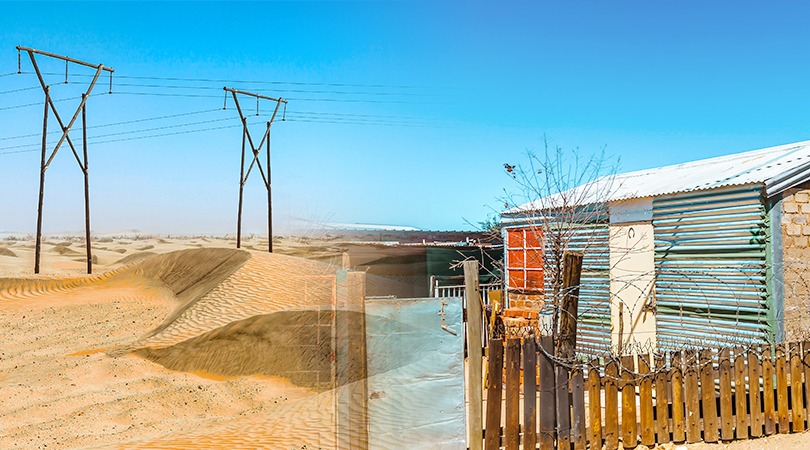
Here in Namibia this is a real challenge. The country’s overall electrification rate is estimated at around 50%, but between 70 and 80% of rural households remain without power while 70% of households in urban areas are electrified. Nearly 40% of Namibians still lack access to electricity.
Namibia relies heavily on electricity imports from South Africa – which has its own reliability challenges, as well as Zambia, and Zimbabwe. NamPower, generates only around 40% of Namibia’s electricity needs with plans to increase domestic generating capacity to reduce the dependence on imports.
Organisations such as the International Energy Agency talk of Namibia having “world-class solar and wind resources” and claim that renewables can lower electricity costs in the country. This is debatable, as I will show in this speech. Locally produced electricity may be cheaper than imports, but wind and solar are unlikely to be the cheapest solution if you want a nationwide grid with Western levels of resilience.
Renewables are often presented as a compelling solution, particularly by a world that is keen that developing nations avoid the carbon-intensive route to industrialisation taken elsewhere.
In a world of volatile oil and gas prices, wind and solar appear attractive: they promise independence from imported fuels and lower operating costs. For countries facing fiscal constraints, this is understandably appealing.
But we must be careful not to confuse potential with reality.
The fundamental challenge with renewables is intermittency. It may seem trivial to point this out, but surprisingly often people forget: solar does not generate at night.
And the wind does not always blow. Arguments that “it’s always windy somewhere” have proven to be overly optimistic in Europe where high weather correlation between markets sees periods of low wind output coinciding.
This means that, on their own, these technologies cannot provide continuous power.
There is another aspect of intermittency that is often overlooked, and that is the relationship between when electricity is generated and when it is actually needed.
Electricity demand does not remain constant throughout the day. It follows a pattern. In most systems, demand rises in the morning as people wake up and businesses begin operating. It may dip slightly during the middle of the day, before rising sharply again in the evening when people return home, cook, heat or cool their homes, and switch on appliances.
This evening peak is typically the most challenging period for power systems. It’s the time when demand is highest, and reliability matters most.
And it is precisely at this moment that solar generation disappears.
Even in countries with excellent solar resources, where capacity factors may reach 25 – 30%, solar output is concentrated in the middle of the day and doesn’t align with the periods of highest demand. This creates a structural mismatch within the system.
Wind can sometimes help to offset this, but it’s highly variable and cannot be relied upon to generate at specific times. There are many periods where low wind conditions persist across large geographic areas simultaneously.
The result is that even with significant investment in wind and solar capacity, power systems still require firm, dispatchable generation that can be relied upon to meet demand during peak periods.
This isn’t a marginal issue, it goes to the heart of system design. It means that renewables cannot replace conventional generation one-for-one. Instead, can only be layered on top of a system that still requires sufficient capacity to meet demand at any time of day, under any weather conditions.
In effect, that means the use of wind and solar requires building not one system, but two: one to generate energy when the weather allows, and another to ensure that electricity is always available when people need it. This is a big reason why grids with large amounts of intermittent renewables have very high electricity prices.
Modern economies require electricity every second of every day. Households and business expect that when they press a light switch the light will come on, regardless of when they press it, how many other people are also pressing light switches, or what the weather happens to be.
This is extremely difficult to achieve with wind and solar, not just because of their intermittency, but because they essentially produce the wrong type of electricity.
To understand why this is a problem, we need to begin with some basic physics. I can see some of you groaning, but it’s impossible to understand the risk without understanding something of how power grids actually work, any why the narratives of wind or solar and batteries are dangerously naïve.
Our power grids are built around alternating current, that is current that varies in a regular sine wave pattern over time – this is the conventional shape of a wave that we all think of when we picture a wave. Voltage also varies in the same way.
This electricity is generated utilising some fundamental principles of physics. If you rotate one magnet inside the magnetic field of another magnet you can induce a current in a wire. In our power grids, this happens in conventional power stations.
An external power source is used to power electromagnets mounted on a rotor which is driven by a turbine to rotate inside another electromagnet called a stator. The turbines all power stations turn at 3000 RPM to give a wave that has a frequency of 50 Hz (by dividing 3000 RPM by 60 seconds to get 50 cycles per second also known as 50 Hz)
For the engineers in the room, if you add magnets you can reduce the speed of the turbine, so one magnet with two poles will turn at 3000 RPM but two magnets with four poles with turn at half the speed to give the same frequency, and this is what we have in nuclear power stations.
The entire power grid is structured around these properties: current and voltage alternate at a stable 50 Hz and the size and shape of the voltage wave must remain stable everywhere on the grid.
The entire grid is designed around maintaining this stable waveform.
Before a generator connects to the grid it must match the grid’s voltage, frequency and phase – that is the peaks ad troughs of the waves line up. This process is known as synchronisation.
Once connected, the generator becomes electrically coupled to the entire network. All the generators on the grid effectively become parts of the same giant rotating machine – they are both mechanically and electromagnetically coupled to the grid. The synchronisation process ensures that waveforms from all the power stations align so one power station isn’t cancelling out the next one.
If electricity demand increases the generators experience greater load and their rotation will tend to slow slightly. The system frequency falls. If generation exceeds demand the turbines will tend to accelerate slightly and frequency rises.
These changes are usually extremely small but they are critical signals that tell system operators whether supply and demand are balanced.
You may have heard the term “inertia”. This is a property where a conventional power station resists the changes in frequency – falling frequency would try to slow the rotation of the turbines but they are big heavy lumps of metal whose speed is hard to change, meaning they resist those changes and help to keep the frequency stable.
This is important because a lot of equipment can break if the frequency moves away from 50 Hz by too much, including turbines, so they have protection relays that will simply cause them to disconnect if they detect a dangerous frequency level. If your power stations start disconnecting you end up with blackouts so it’s pretty important that doesn’t happen.
Conventional generators also have electromagnetic inertia which means they also support voltage. Voltage can be thought of as the electrical pressure that pushes current through the network. If voltage rises too high or falls too low equipment can be damaged.
If grid voltage rises, the current in the electromagnets that generate electricity in synchronous generators automatically adjust and act to pull the grid voltage back down.
In both cases – frequency control and voltage control – conventional power stations do this automatically due to their physical properties. They do not require an external control system to detect changes in grid behaviour and instruct the changes.
Wind and solar generators behave very differently. They produce direct current ie current and voltage that do not vary in time. They are converted to alternating current using electronic devices known as inverters.
Inversters work by following what the grid is doing a bit like a game of jump rope – the grid current and volage are alternating which is like the rope turning, and the inverter is like the child playing – if the rope is turning in a stable and predictable way the child will jump in and skip, and similarly, the inverter will inject its current onto the grid.
But if the grid is not stable the inverter will not inject or stop injecting, just as a child will jump out of the game if the rope starts to turn in an unpredictable way, or at the wrong speed.
These inverters are “grid following” ie they cannot create the current and voltage wave. There are some efforts to develop grid forming inverters that would do this but there are big challenges in their development and so far there are no such devices in operation anywhere in the world where they are actually forming the grid.
Batteries behave in a similar way, and while batteries and inverters can be used to provide synthetic inertia and voltage control, they cannot do this naturally. They require a control system to instruct them to act, and they take current away from powering loads to provide this service which makes it expensive because the income they lose must be compensated.
And in the limit, if you had lots of these devices on the grid, to control a voltage problem you could easily create a frequency problem – you take current away from powering loads in order to support voltage and in doing so you are reducing generation which makes the frequency fall.
Frequency is broadly the same everywhere on the grid, but voltage is not. This is why it’s impossible with today’s technology to build anything more than micro grids with solar and batteries – over relatively small distances, voltage differences emerge based on the types of equipment connected at different locations.
Equipment that is essentially inductive will impact voltage one way while capacitive loads will affect it differently. You need to use alternating current if you want to build regional or national grids.
This means it is very important to have enough synchronous conventional generation around the grid to ensure voltage remains stable.
These constraints are not theoretical. They are rooted in the fundamental laws of physics.
When we ignore those constraints, electricity systems become fragile, which is exactly what we are seeing in Spain in its solar-dominated grid. Spain has allowed most of the conventional generation in the south to close and is now struggling to control voltage, with the grid operator warning that further blackouts cannot be ruled out.
A year ago, the entire Iberian peninsular experienced a full blackout which immediately cost 11 lives and resulted in an estimated 165 excess deaths over the two days affected by the outage.
While in many places across Africa, periods of power grid instability or blackouts are not unusual, they are highly unusual in Europe where society operates on an assumption of continuous availability of electricity.
It is not uncommon for people to have medical equipment in the home such as ventilators for breathing and indeed most of the direct fatalities occurred when the backup generators powering such ventilators failed to operate correctly.
It is therefore expected that in a modern power grid, there will be very limited interruptions – in the UK the standard is a loss of load expectation of no more than 3 hours per year.
There has been a lot of misinformation about the blackout in Iberia, with many renewables advocates insisting it wasn’t caused by renewables. I can tell you categorically that it was.
First of all the grid was very weak with low levels of conventional synchronous generation.
A grid fault occurred which was later traced to a faulty solar inverter. This caused both voltage and frequency oscillations. Initially these were damped but they recurred.
Simultaneously, a large amount of solar generation turned off as prices went negative. Negative prices mean you pay the customer to consume the electricity, rather than receiving money for it. Obviously generators won’t produce if it costs them money, so they turned off.
This caused frequency to fall.
In the weakened state of the grid, a large number of wind and solar generators disconnected as a result of this drop in frequency. This was a failure to meet their grid code obligations which required them to be able to ride through drops in frequency of that magnitude.
These further disconnections caused an even larger drop in frequency, this time outside the ride though rules in the grid code. This caused large numbers of conventional power stations and interconnectors to trip off.
That led to a catastrophic drop in frequency – within seconds the entire grid collapsed causing a full system blackout.
So while the original fault was caused by a solar inverter that is in my view irrelevant. Grid faults will always occur and can be caused by all sorts of things. The fact that the Genesis of the blackout was an inverter fault is not really important.
What IS important is that the real cause of the blackout was the failure of inverter based generation, that is wind and solar, to comply with grid code fault ride through requirements. This failure was not shared by conventional generation and it was THE critical factor in the blackout.
So yes, renewables absolutely did cause the Iberian blackout but not for the reasons most people think.
Some people think that developing markets could choose a different route – building power grids using direct current provided by wind, and in particular solar power.
But the technology to maintain stable voltage over large distances with direct current have yet to be invented. Microgrids can operate well with dc, larger grids cannot.
The problems of adding intermittent generation to power grids can ironically be greater in developing countries. Few countries have no power infrastructure at all, so in most places an ac grid already exists.
However developing countries often have relatively weak grids. They have less redundancy, fewer interconnections, and more limited operational resources. Introducing high levels of intermittent generation may well increase the risk of outages.
The second issue is cost. Much has been made of the declining cost of wind and solar. But these headline figures often exclude system costs: transmission upgrades, backup generation, storage, and balancing services.
Renewables have low energy density – that is they take up more space than conventional generation and require more wires to connect them.
For example, a good-sized gas power station would have a capacity of about 800 MW and needs one grid connection. An 800 MW windfarm would need 60 wind turbines, each of which needs to be connected.
But the gas power station would run over 90% of the time versus about 30% for wind. So you’d need 3x as many wind turbines to get the same electricity per year as the gas plant. That translates to about 180s the amount of wires. That’s a big incremental cost.
Intermittent generation requires backup – that is generation or storage that is available when it’s not windy or sunny. Batteries are not a good solution at scale – they are unable to store the amount of electricity needed to provide efficient backup, and run out quickly – even the best batteries today run out in about 4 hours.
Whether you choose batteries or conventional generation for backup, it requires significant capital investment to build them and connect them to the grid.
Then you also have to manage the real time variability that wind and solar produce. Every cloud and every gust of wind affects electrical output. But, as I described earlier, supply and demand need to be closely matched in real time, so balancing out the effect of this variability requires more intervention by system operators at a significantly higher cost than for conventional generation.
So in practice, integrating renewables at scale requires significant additional investment and significantly higher ongoing costs for operating the grid. For countries with high borrowing costs, this can be a major constraint. What appears cheap at the project level is generally very expensive at the system level.
The third issue is social impact. Energy systems must serve people. If electricity is unreliable or unaffordable, it does not deliver its intended benefits.
The Bihar solar scheme in India provides an important example. Greenpeace invested over US$ 400,000 in 2014 to set up 70 kW of photovoltaic cells on the rooftops of public buildings throughout the village of Dharnai, a community of about 3,200 people. The scheme also included 224 batteries.
The village had been without electricity for three decades, so this project was welcomed with some excitement. However, problems emerged almost immediately, and when dignitaries arrived to inaugurate the grid, villagers protested that they wanted ‘real electricity, not fake electricity’.
By this they meant power from the central grid, generated mostly using coal. From the outset, the system could not cope with demand, and villagers faced rationing.
In fact, for Dharnai, the project was an indirect success – it highlighted the plight of the village to people with the power to effect change, and the following year a new transformer was installed, re-connecting the village to the regional electricity grid.
Participation in the solar scheme fell from 380 households at the start to just 120 a year later. Electricity from the grid was also cheaper than that from the solar scheme.
Three years after the inauguration, the mini-grid started collapsing, with the batteries failing due to a lack of maintenance. Now the main project site is being used as a cattle shed.
All that remains of the scheme are a few solar pumps installed on farmland in the village, which are operated and maintained by the farmer, who benefits from free electricity to irrigate his fields during the day, which is the only time he wants to operate the pumps.
The Bihar scheme, and the Iberian blackout illustrate some of the challenges associated with green grid solutions. And the financial costs are very apparent when you compare the proportion of intermittent renewables a country has installed with the cost of electricity. The more wind and solar, the higher the cost of electricity.
But it’s also not necessarily the case that wind and solar power are truly green or truly ethical. And I hope you will forgive me for sounding somewhat cross about this, but developed nations are often exporting their pollution to the developing world.
A good example is Canada, where a new energy policy is under consideration that would involve a lot of wind power, a lot more grid infrastructure and therefore the use of a very large amount of copper. Yet Canada’s last remaining copper smelter has warned it faces closure since environmental regulations in Canada are forcing plant upgrades that are unlikely to be economic.
Canada is developing a copper-intensive energy policy to support green energy, but it will have to import the necessary copper because it’s too dirty to produce locally. This is gross hypocrisy and it is evident across the developed world. Wind in particular requires rare earth magnets yet most countries ban their production on the grounds the process is highly polluting.
Much of the extraction for the minerals used in green energy and their supporting technologies occurs in developing regions, including Africa.
Mining can bring economic opportunities, but it also carries risks. Environmental degradation, water pollution, and social disruption are common concerns. Too often, local communities bear these costs while the benefits accrue elsewhere.
If Africa is to play a central role in supplying these materials, it is essential that governance frameworks ensure fair distribution of benefits. Resources should support local development, not just global supply chains.
Which brings us to fossil fuels. Despite the global push for decarbonisation, fossil fuels remain central to energy systems worldwide. Why? Because they are very very useful. They have very high energy density and are easily portable. This is why their use is growing around the world.
For developing countries, this is particularly important. Economic growth requires reliable energy. Industrial processes, manufacturing, and urban development all depend on consistent energy supply.
This does not mean ignoring environmental concerns, but they need to be considered alongside other concerns, particularly the alleviation of poverty.
We must broaden our definition of sustainability – carbon dioxide emissions are important, but they are not the only factor, even when considering the environment.
For example, manganese is an important transition mineral. It is widely used in steelmaking, glass-making and in lithium-ion batteries. Therefore it is a component in wind turbines, solar panels, and batteries including in electric cars.
About 80% of the known world manganese resources are in South Africa
For the production of pure manganese, after mining, ore is crushed and screened, and split into various particle sizes in a magnetic separator. Crushed and screened ore may be concentrated by washing, sink-float, jigging, tabling, flotation, dense media separation and high intensity magnetic separation to produce a saleable concentrate. Silicon waste is typically removed through flotation separation, and clays and other contaminants are washed out. The specifications of the resulting concentrates vary depending on the nature of the ore and the target market. Different grades of ore are blended according to required specifications prior to crushing.
Carbonate manganese ores may be calcined which is a thermal treatment process to bring about thermal decomposition, phase transition, or removal of volatile fractions.
Higher-quality fines may be agglomerated, nodulised, sintered or pelletised. Sintering, called “rittage”, is the process of forming a solid mass of material through heat and pressure without melting to the point of liquefaction.
Lower-quality ores, fines and complex fine-grained ores may be flotated. In cases where manganese is associated with other metals, hydrometallurgical processes such as solvent extraction are used, sometimes after roasting or sintering to improve solubility.
Roasting is a metallurgical process where ore is converted into its oxide by heating it below its melting point in the presence of excess air, during which moisture and non-metallic impurities are released in the form of volatile gases.
In the production of ferromanganese, after crushing, the manganese ore is mixed with iron ore and carbon and then reduced either in a blast furnace or in an electric arc furnace..
As with other critical minerals, the extraction and processing of manganese creates adverse environmental and human health impacts.
Manganese contamination in domestic water supplies is likely close to mines, which can cause cognitive impairment and developmental delays in young children, mental health conditions and a condition called manganism, which is similar to Parkinson’s Disease.
Water contamination also leads to higher manganese levels in fish, which enter the human food chain, contributing to the exposure of local populations.
The mining industry uses significant amounts of water in its operations and manganese mining also directly decreases the amount of water available to communities through a process of “de-watering” the natural aquifer system to ensure that open pits do not become flooded.
This leads to depletion of groundwater reducing the amount available for extraction from boreholes. A 2017 environmental scoping report commissioned for a prospective manganese mining operation in South Africa found that “groundwater levels would not recover within the 100-year simulation period”.
Another South African study in 2017 predicted a low to high risk of a drop in water levels of up to 22 metres that would continue to affect borehole users up to 8.3 km from the mine, even decades after the mine in question ceased operations.
Blasting and crushing activities at the mines propel large amounts of pollutants into the atmosphere with long-term exposure to the dust leading to silicosis, silico-tuberculosis, pulmonary tuberculosis, obstructive airways disease, and occupational asthma.
Blasting also causes structural damage to homes, furniture, and other community infrastructure, generally without any compensation from the mines. The blasts are extremely loud and can create measurable ground tremors, causing heightened levels of anxiety in local communities.
I say this not to be negative about extraction. Countries should exploit their natural resources – they are useful and bring economic value and potential wealth.
But it’s important that the extraction and processing of transition minerals is done with appropriate environmental care, and ensuring that local communities are insulated as far as possible from the harms while participating in the benefits.
It is particularly galling when developed nations insist that Africa must industrialise in a low-carbon way, while they make use of materials that are produced in Africa, processed in China and other parts of Asia, using processes that would be banned for environmental reasons including their carbon intensity in the developed world.
It’s tempting to say that Africa should simply ignore pressure from the developed world, given the clear inconsistencies in its approach. But in reality, access to capital still matters, and that brings us to the role of ESG.
Environmental, Social and Governance frameworks have become a major influence on global capital flows. Yet there is an increasing disconnect between ESG theory and real-world outcomes.
Many financial institutions have refused to fund fossil fuel projects or mining operations, while continuing to finance wind and solar developments whose supply chains are fundamentally dependent on those very same activities.
There is a clear contradiction in funding the end product while refusing to support the inputs required to build it.
But ESG is evolving. The sharp rise in fossil fuel prices following the war in Ukraine exposed the risks of underinvestment in conventional energy, and led to a period of significant underperformance in ESG-focused investment strategies.
This triggered a broader reassessment, with some investors and policymakers recognising that energy security and affordability must sit alongside decarbonisation goals. The result is a gradual softening of rigid ESG constraints, but also a growing realisation that sustainability cannot be reduced to a single metric.
For Africa, the implication is clear: engagement with ESG is necessary to access capital, but it must be approached pragmatically, ensuring that local development, energy access, and economic resilience are not sacrificed to externally imposed frameworks.
As Africa industrialises, energy access, affordability, reliability, environmental protection, and social equity all matter.
An energy system that reduces emissions but leaves people without reliable power is not truly sustainable. Nor is a system that depends on exploitative supply chains.
A pragmatic approach is needed, which combines renewables with firm generation, investing in grid infrastructure, and developing institutional capacity.
Where population density is low, local solar plus battery solutions might make sense, supported by diesel generators to give higher resilience. Often fuel distribution systems are already developed.
Where hydro and geothermal energy can be exploited, these often have the highest social benefit since they are dispatchable and not intermittent.
Solar power in Africa has a capacity factor of between 25 and 32%, so in the best case it is approaching that of wind. These low capacity factors are extremely important to consider when planning a grid.
For the most part, space is not a limiting factor, but there will be a major requirement for grid infrastructure, and such low capacity factors impose a large requirement for backup generation and storage.
Nuclear is also a very good option. It’s often dismissed as too expensive but in South Korea and the United Arab Emirates, standardised nuclear plants have been delivered at costs of around USD 5-6 billion per unit, a fraction of the cost seen in Europe and the US.
This tells us that nuclear is not inherently expensive. It becomes expensive designs are constantly changed, when regulatory processes become uncertain and fragmented, and when projects are subject to legal challenges and other delays.
In other words, cost is not just a function of technology, it’s a function of execution. For Africa, the constraints lie in governance, skills, and institutional capacity, if these can be managed, nuclear would be a very good option. Particularly the small Advanced Boiling Water Reactors being developed by GE and Hitachi in Canada would be an ideal size for Namibia.
Institutional capability is important for grid operators. Operating a modern power system with high levels of renewables requires sophisticated forecasting, real-time balancing, and market design. These capabilities take time and investment to develop. Without them, systems may become less stable rather than more.
Urbanisation must also be considered: as cities grow, demand becomes more concentrated and more critical. Interruptions to power supply can have cascading effects across transport, communications, and public services. Reliable baseload power is particularly important in these contexts.
There is also an industrial dimension – many industries require continuous power. Interruptions can damage equipment, reduce productivity, and increase costs. For countries seeking to industrialise, energy reliability is a key competitive factor.
Finally, there is a question of fairness. Developing countries have contributed relatively little to global emissions, yet they are often expected to adopt the most expensive and complex solutions.
It is also important to consider the regional context, particularly for countries such as Namibia, which are part of the Southern African Power Pool.
Namibia doesn’t operate in isolation. Like many countries in the region, it relies on imports to meet a significant portion of its electricity demand, particularly from South Africa and, at times, from Zambia and other neighbouring systems.
This interconnected system has many advantages. It allows countries to share resources, smooth out local shortages, and benefit from a more diverse generation mix. In principle, it should improve resilience.
But it also introduces dependencies which can easily become vulnerabilities. South Africa, which is the largest system in the region, has faced persistent challenges in recent years, including generation shortfalls and load shedding.
Many countries in the region are pursuing similar energy strategies, with increasing emphasis on wind and solar generation, creating risks of weather-correlated shortages when low wind, particularly at night, covers multiple countries.
For Namibia, this raises important strategic questions. To what extent should the country rely on imports, particularly when neighbouring systems may face their own constraints? And how should it balance investment in domestic generation against the benefits of regional integration?
If we turn specifically to Namibia, the question of system design becomes much more concrete.
The country is often discussed in terms of its renewable potential, particularly solar, which is indeed among the best in the world. But Namibia also has emerging oil and gas resources that could play a critical role in shaping its energy future.
Large offshore oil discoveries have been made in recent years, and while production is still some years away, they have the potential to transform the country’s economic outlook. There are also known gas resources, most notably the Kudu gas field, which has been under consideration for development for many years.
Namibia also has significant under-developed hydro resources particularly through projects such as the proposed Baynes scheme on the Kunene River. Although much of Namibia’s hydro potential depends on shared river systems, requiring cross-border cooperation, long development timelines, and significant capital investment.
These resources offer the possibility of developing domestic, firm, dispatchable generation — the kind of generation that is essential for building a stable electricity system.
As I have already explained, power grids are not simply collections of generation assets. They are dynamic systems that require stability in both frequency and voltage. That stability is provided, in large part, by synchronous generation, generators that are physically connected to the grid through rotating machines.
Without sufficient synchronous generation, the grid becomes difficult to control. Voltage becomes unstable, frequency becomes more volatile, and the risk of cascading failures increases.
This is not a theoretical concern. It is a fundamental property of how alternating current systems operate.
For Namibia, this means that any future national electricity system must include a sufficient amount of synchronous, dispatchable generation, whether that is gas, oil, hydro, or potentially nuclear.
Just as importantly, that generation cannot all be located in one place. Power systems require geographic distribution of generation to support voltage across the network and reduce transmission constraints.
If all firm generation is concentrated in a single location, large parts of the grid can become electrically weak, making them more vulnerable to instability and outages.
This has important implications for planning. It suggests that Namibia should consider not just how much generation to build, but where to build it, ensuring that different parts of the country are supported by local sources of stability.
There is also a question of timing. Developing large-scale energy infrastructure can take many years, particularly for technologies such as nuclear or major hydro projects.
Gas-fired generation, by contrast, can often be deployed much more quickly. Gas turbines are relatively standardised technologies, with established global supply chains. In many cases, plants can be built within a few years, providing a relatively fast route to increasing firm capacity. Availability for smaller units is far better than for larger turbines.
This speed of deployment can be critical for countries seeking to expand electricity access and support economic growth in the near term.
Some ask whether coal should be considered as part of the energy mix. Coal remains a widely used source of firm power globally, and it has historically played a major role in industrialisation. It also has shorter supply chains than many alternative conventional generation technologies.
However, coal presents significant environmental challenges, and access to financing for new coal projects has become increasingly constrained. Since Namibia lacks large domestic coal resources, coal is unlikely to be a good choice for the country’s power system.
What is clear, however, is that Namibia cannot simply add lots of wind and solar to the grid and expect it to function reliably.
Without sufficient firm, synchronous generation, high levels of intermittent generation will increase instability rather than reduce it.
For Namibia, the challenge is to design a system in which each technology plays the role it is best suited to perform. So what would a sensible energy system for Namibia actually look like in practice?
The first choice is to decide whether to build a full national grid at all or whether solar-based micro-grids might be more economic for remote communities.
An national grid would need to be built around a backbone of firm, dispatchable generation. In the near term, that is most likely to be gas, particularly if domestic resources such as the Kudu field can be developed. Gas-fired power stations are relatively quick to build, flexible to operate, and well suited to supporting grid stability.
Developing gas as part of the energy system will also require gas infrastructure: pipelines, processing facilities, and potentially import capacity if domestic production is delayed.
Namibia currently has very limited gas infrastructure, so this would require significant upfront investment and careful planning. But this is not unusual – all energy systems require infrastructure, whether it is pipelines for gas, transmission networks for renewables, or supply chains for fuel imports.
The key question is not whether infrastructure is required, but whether it delivers value. Gas infrastructure has the advantage of supporting firm, dispatchable generation that underpins system stability and enables economic activity.
It can also be developed in stages, aligned with demand growth, reducing the risk of over-investment. In that sense, it offers a more flexible pathway to building a reliable energy system than many alternatives.
It would make sense to make full use of Namibia’s excellent solar resource — but in a supporting role. Solar can reduce fuel consumption and lower costs during the day, but it cannot replace the need for reliable generation that is available at all times.
It would also make sense to continue to make use of regional interconnection through the Southern African Power Pool, but without over-reliance on imports. Interconnection should provide resilience, not create dependency.
It also means the risks of over-building generating capacity are reduced by the excellent export potential.
And finally, any system should be designed with the future in mind. As demand grows and institutions develop, there may be a role for more capital-intensive technologies such as nuclear or additional hydropower. But these must be approached in a way that reflects Namibia’s economic and institutional realities.
Small nuclear reactors could be a very good solution, avoiding the need for gas, but there are significant challenges to deployment.
In short, the objective is not to maximise any one technology, but to build a system that is balanced, resilient, and capable of supporting long-term development, widening access to energy and helping to reduce poverty.
Only by taking a balanced and pragmatic approach can outcomes that are both sustainable and equitable be achieved. This requires careful planning, strong institutions, and a willingness to engage with complexity.
But it also requires honesty.
Honesty about the limits of different technologies. Honesty about costs. And honesty about the trade-offs that cannot be avoided.
The debate about energy is too often framed in moral terms, as though there is a single “right” answer that applies everywhere. But energy systems are not moral philosophies. They are physical systems, governed by the laws of physics, constrained by economics, and shaped by the realities of geography and development.
For countries like Namibia, the priority should be to deliver reliable, affordable electricity that supports growth, reduces poverty, and improves quality of life.
That means building systems that work under real conditions rather than idealised ones. Systems that can withstand shocks, manage variability, and provide power not just when the sun shines or the wind blows, but whenever it’s needed.
It also means ensuring that the benefits of energy development are widely shared. That communities gain not just access to electricity, but economic opportunity, while being protected from the environmental and social harms that can accompany both extraction and infrastructure development.
There is no single solution. There is no perfect technology.
But there are better and worse ways to design a system.
The best systems are those that recognise the strengths and limitations of each technology, and combine them in a way that is balanced, resilient, and grounded in reality.
The aim should not be to follow a global narrative, but to build a system that works for Namibia. A system that delivers power when it is needed, at a price people can afford, and that supports long-term development.
Because ultimately, the question is not whether an energy system is green.
The question is whether it works.
Thank you.


As previously said, when youre always negative without offering positives and potential solutions, it appears you’re just waiting for something to go wrong, so you can say “Told you so!”
Would be far more interesting to hear you write about how to solve the challenges associated with an increasingly sustainable grid. Where hydro might be needed and where it can go in the UK? Who is building good inverter/battery tech and innovating such that we reduce the synchronous generator risk? How the non-generating synchronous compensators are helping and what challenges still need to be solved by them? How China is accelerating electrification and what incredible tech it is building? What challenges the grid has from an increasing number of users installing batteries – increasing the standing charge for everybody else? Etc…etc.
I was invited to speak at this conference. If you read the speech you will see I set out various alternatives and their pros and cons. It’s not for us in the UK to dictate to Namibia or any other developing nation, how they should build out their grid.
And actually – I warn about the risks in Britain so someone can do something about them – I would prefer not to be saying “I told you so” after people die in a blackout
Oh and China is burning far more fossil fuels than the energy it gets from renewables and its fossil fuel use is growing faster than its use of renewables. The idea China is some sort of green powerhouse is fanciful.
Isn’t the problem that we have what were third world countries, steadily becoming first world countries. Advanced technology being installed. There is a voracious appetite for power and energy as electricity, and like the problems recognised with the expense of patriot missiles for air-defence and there is limited production, that we are hitting the same problems with energy worldwide. China is a renewable powerhouse, but has to build coal as well, because their demand is so high that coal alone wouldn’t be enough and they couldn’t mine it fast enough, and they would be forever living in Smog cities, and they need it as back-up to wind and solar.
China’s progress with the increasing standard of living for the population, with fridges and freezers, and air-conditioning, you can’t afford to burn through every lump of coal so quickly. Even China understands that once their coal reserves are gone, their standard of living would drop precipitously…….not conducive to a stable political situation. They know that they have to make it last!! Also there are logistical challenges with getting coal transported.
Do you think China are stupid? They are far more pragmatic than we appear to be.
We could use coal. What happens if you need a back-up fuel supply for 60 days of a year due to insufficient wind/solar. Does it really matter if it’s putting out 800g/kwh instead of 200g/kwh? Unfortunately going for absolute ZERO emissions brings in severe economics, where reducing things by 90% could still be economic until future enabling technologies are economic.
China has 170 Billion tons of coal reserves, going at 4 Billion tons per annum……do the Maths………30-40 years left of the Communist party running China?
” … Where hydro might be needed and where it can go in the UK?” Topography rules!
Nearly 11 years ago, Euan Mearns posted “The Loch Ness Monster of Energy Storage” on his blog.
Not only is the article extremely interesting, but so too are many of the 127 comments.
https://euanmearns.com/the-loch-ness-monster-of-energy-storage/
Unconvinced. Too expensive and too many ifs and buts. Pumped hydro in NOT the only show in town. Please look at the Royal Society report.
Bravo!!!
Bravo.
Could you comment on the EU CBAM scheme?
Seems unconscionable to me, developed countries became developed on the basis of carbon and other emissions. We all stand today on the shoulders of the great polluters in our past (and their cheap exports). Now we propose to deny this opportunity to developing countries? Making the leap from developing to developed status is hard enough, it is unclear whether it is even possible without cheap carbon-based energy and the resulting exports. Has any country managed it? It’s one thing to force our low carbon standards on them, it’s another to make them pay for it. We’re just pulling up the ladder behind us….
A few years after the end of Apartheid I was involved in consulting for Eskom who at that stage had great ambitions to become the dominant electricity provider across sub-Saharan Africa. Because South Africa had renounced nuclear weapons, nuclear power was no longer on the agenda. But coal and hydro dominated: gas was regarded largely as stranded assets in the age when LNG projects were still rare and mostly between a dedicated source and customer. African oil development was still limited, with Angola really the only country with significant supply in Southern Africa. Wind and solar were really not on the agenda.
In the intervening years, Eskom became a failed basket case, unable to maintain supply even within South Africa. One hopes that the politicians in Namibia will not allow their country to go down a similar path.
Another of your very instructive posts, thanks.
Particularly the electricity / grid fundamentals ‘buried’ within a speech/paper directed at specific geographic area.
Thank you again for an insightful analysis. Is not the reasoning behind the move in the west away from fossil fuels, partly at least, the need or desire to avoid price instability as fossil fuels begin to run out. I guess, in truth, when we arive at that stage, energy will be more expensive. In my mind, and clearly not as an expert, i like to think what things will be like when there are no easily won fossil fuels. My gut tells be that it will be wind, nuclear and storage, in the UK, and solar, storage and nuclear in hotter under developed countries. I am really just guessing.
Storage though does seem to be key. What I cant figure out though is what is the optimun means of storage is. The Royal Society report seems to conclude that hydrogen from electrolysis stored in underground salt caverns and then burnt is the answer here. If that is feasable at scale, it does seem to me better than batteries as it avoids the problems with DC technologies and is most probably cleaner than batteries. Are people at least doing this at any scale or is it a pipe dream? Because of my 45 yr history with domestic thermal storage, and its ability to flatten the curve for diurnal heating reqirements, shoud we be building this into planning for future homes rather than just supporting heat pumps? (I would really like to see actual real world efficiency figures for Jan and Feb for heat pumps and an annualised aveage COP based on actual use for the year.). Thanks again and well done for pounting out the real difficulties we face. Its is important I think, that you keep presenting the truth and the science behind it. Very few in the mass media have any idea what is going on.
There is loads of data about heat pump efficiency (SPF), from Ron’s (old) link above, or even the Octopus summary (across the fleet of 10s of thousands of Octopus Cosy heatpumps) – https://octopus.energy/cosy-heat-pump-performance/
The average and medians come out at 3.5-3.8 depending on region/supplier/…., with a cost benefit typically starting around 3.1 when you have a tariff for heat pumps. Intra day storage is easy, even with the thermal mass of a house. Even intra-week is fairly easy when combined with battery storage. Its the rare multi-week ‘Dunkelflaute’ that happen once or twice per year that need extra storage, and thats more expensive to solve.
Every ‘green environmentalist’ should read this! It’s another excellent piece of work that should be added to the curriculum of all secondary and further education colleges.
A very good article. One of the solutions to the problems in Namibia, and elsewhere for that matter, is in changing from a ‘Top Down’ system to one that is a mixture of Top Down and Bottom Up. What this means is that the individual house, office, shop or factory has their own generation system, with any surplus energy being put back into the grid.. We have made a start with rooftop solar systems, but what is needed is a system that is clean, green, no waste, works 24/7 and can be erected at the point of demand. Such a system does not at this moment exist, but watch this space, as we are hoping to make an announcement in the next few months.
Ed Hogbin: ‘I would really like to see actual real world efficiency figures for Jan and Feb for heat pumps and an annualised aveage COP based on actual use for the year.”
For core information, a tad dated, but the principles won’t have chabged much:
“Heat pumps and UK’s decarbonisation: lessons from an Ofgem dataset of more than 2,000 domestic installations.”
Context – Methodology – Analysis – Discussion – Recommendations
Colin Meek, Spring 2021
See Fig 10, p26; ASHPs Table 15 & Fig 13, p27/28; GSHPs Table 16 & Fig 14, p28
https://www.recc.org.uk/pdf/performance-data-research-focused.pdf
Brilliant. Absolutely brilliant.
Sad to see this basic, paid climate denier content. The Iberian Blackout was not caused by Inverter faults, they are far too well designed. The cause was the poor condition of electrical infrastructure in Spain and Portugal, something they are working hard to correct. See https://www.pv-tech.org/over-voltage-triggered-iberian-blackout-report/
Yes the hypocrisy of developed countries is food for thought, but renewables is the only way out of the current crisis.
It would be great if Fossil fuel companies kept their oil in the ground to prevent further global warming and as backup against a planet wide blackout caused by a massive volcanic eruption and associated mini ice-age!
“In both cases – frequency control and voltage control – conventional power stations do this automatically due to their physical properties. They do not require an external control system to detect changes in grid behaviour and instruct the changes.
Wind and solar generators behave very differently. They produce direct current ie current and voltage that do not vary in time. They are converted to alternating current using electronic devices known as inverters.”
Do conventional power stations control the frequency and voltage through their physical properties or do they use governor control and automatic voltage regulators?
Is it true that wind turbines produce direct current?
“Simultaneously, a large amount of solar generation turned off as prices went negative. Negative prices mean you pay the customer to consume the electricity, rather than receiving money for it. Obviously generators won’t produce if it costs them money, so they turned off.
This caused frequency to fall.
In the weakened state of the grid, a large number of wind and solar generators disconnected as a result of this drop in frequency. This was a failure to meet their grid code obligations which required them to be able to ride through drops in frequency of that magnitude.”
This isn’t at all what has happened during the Iberian event. Yes, PV changed power output due to negative prices. However, that change in active power output did not cause a material change in frequency (large ENTSO-E system) and definitely did not cause any other wind and solar generators to trip due to underfrequency protection. The change in active power output on PV due to negative pricing had a more pronounced impact on the voltage. Those wind and solar generator disconnected due to overvoltage condition, not underfrequency.
This is an interesting talk, lot of good stuff in there.
Wondering if it is intended in part as a job application?! Lots of worse places to spend a year or two than Namibia…
I have seen the criticism of Kathryn’s post before; saying that she should be offering solutions. I believe she does but mainly from a financial perspective, subsequent to her analyses.
I appreciate this , though I am sometimes not in agreement with all her suggestions.
However creating solutions does require analyses and such analyses are important in finding issues that need to be resolved or false / straw arguments.
The prevailing trends seem to be that everything must be electric.
I believe this is untrue both for domestic and, especially, industrial applications – which often require thermal energy and the higher (temperature) the better (it also costs less to store energy at higher temperatures). Such energy, even if “waste” has value – for example driving heat pumps or electricity generation – or even for local/district heating.
There appears to be no government thinking(?) of energy on a holistic basis – often relying on implementing old or limited technology (such as hot water tanks or batteries).
Similar conflicts (in thinking or briefing against) occurred when HAWT ridiculed VAWT .
I am not saying these are valid solutions (but they may well hold the germ of such) .
However encouraging government to think (so) innovatively about innovation (what it is and how to start it) would require a great deal of effort and time – as there is no forum for so doing.
So were might it be done and where are such resources for innovation and defining a (radical) innovation system??
(Admittedly the benefits would be great and might have, if addressed in the past to the UK being a world leader in wind turbine technology….)
In Namibia, why didn’t you consider underground Hydrogen storage for wind and solar?
Presumably because Hydrogen-based storage is a total nightmare.
The main problems are leakage and catalysis.
Hydrogen is the smallest molecule in physics/chemistry – it is able to squeeze between the gaps in a polycrystalline solid i.e. it will slowly leak even through a stainless steel container (and causes accelerated metal fatigue due to the encroachment of hydrogen atoms into the structure) – containing it in an underground well would be a futile effort
Electrolysers and fuel cells require a catalyst, usually Platinum, and they require a lot of it since each cell only provides about 1 volt – if each cell needs to handle 1kW then your Platninum-coated electrodes have to be big enough to handle 1000A – that’s a lot of Platinum and Copper – and you still need a thousand such cells for a Megawatt, or a million of them for a Gigawatt.
It just doesn’t scale, unfortunately.
The best prospect for long-duration energy storage in my opinion is pumped hydro. Old tech, but it doesn’t need any rare/special materials.
Thanks Tom. I clicked on the LIKE link in my email – but I am not sure if this will show up ;-{
Most educational ; I had wondered about the high mobility of hydrogen making (underground) storage a potential issue .
I had wondered about underground storage for high temperature thermal storage – suitable for closed cycle gas turbines generators (which would have roughly the CAPEX of gas fired generators) — for LDES (week or two). But generally not sanguine about costs of LDES
Just checking on the source for your account of the Iberian blackout. The ENTSOE report? or elsewhere.